
Choosing a track
What Type of Curtain Track Do I Need?
A practical guide to choosing the right curtain track for your window, curtain weight, heading style and fixing surface.
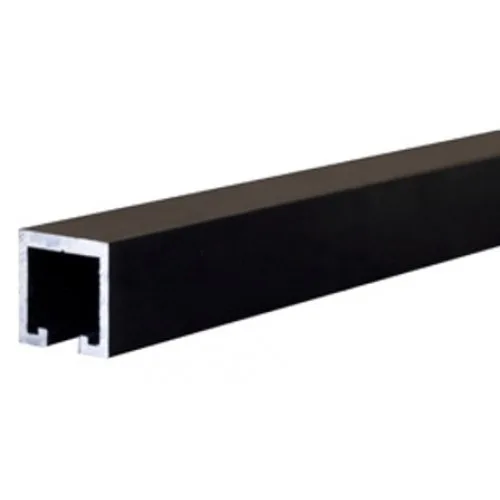
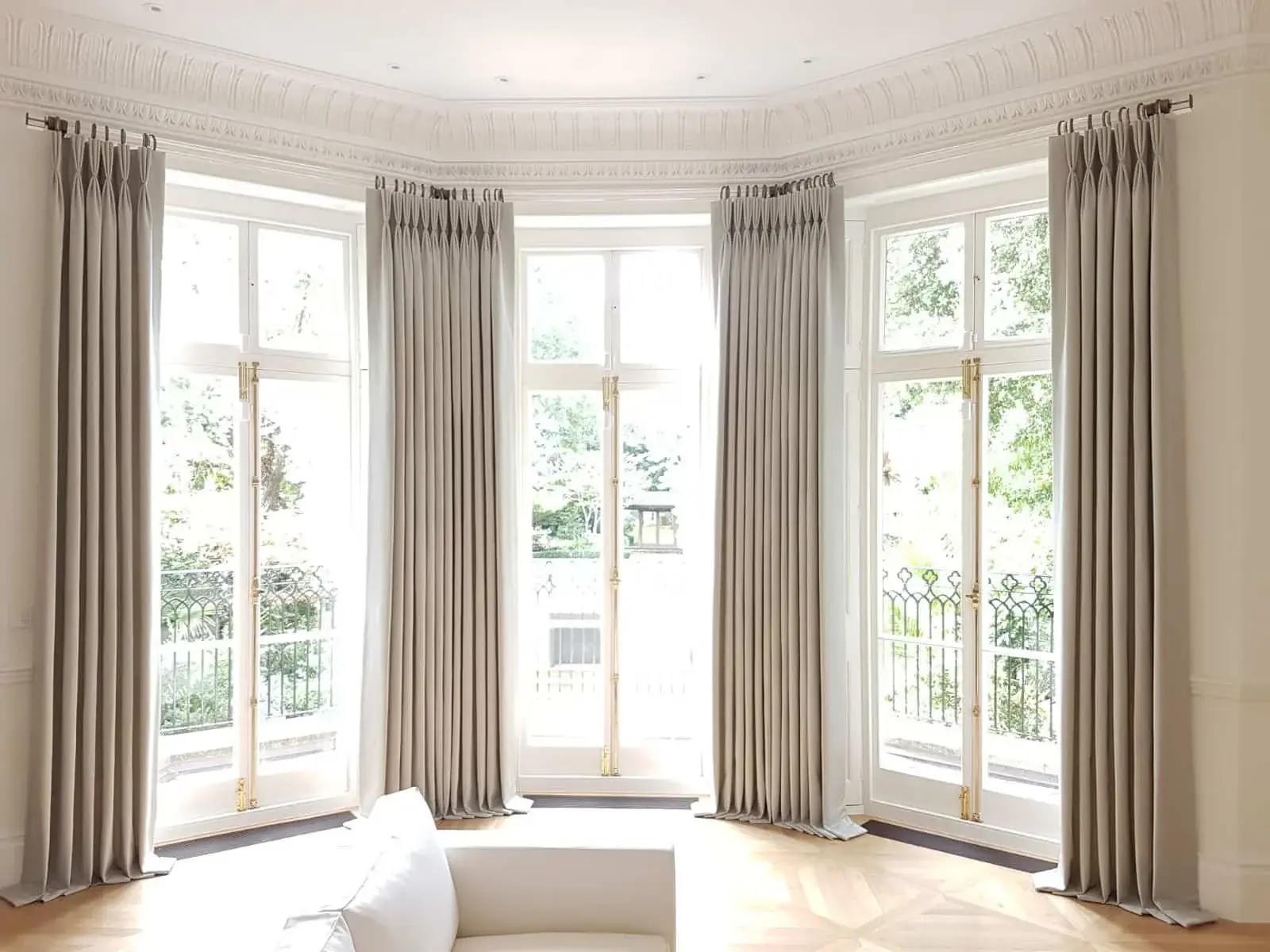
Illustrative design reference. Image: Curtain-Tracks.com
Quick answer
The right curtain track depends on five things: curtain weight, window shape, heading style, fixing surface and how far the curtains must project from the wall. Aluminium tracks are usually the best all-round option because they are stronger, smoother and available in straight, curved, wall-mounted and ceiling-mounted systems.
Visual planning
Start with the shape of your window.
A continuous run across the opening. Plan space at each end for the curtains to stack clear of the glass.
Illustrative top view. Not a scale drawing or a fitting specification.
SECTION 01
Start with the window, not the track
Before comparing brands or profiles, look at the shape and surroundings of the window. A straight bedroom window has very different requirements from a bay, a full wall of glazing or bifold doors.
Check whether the curtains need to clear handles, radiators, deep sills, blinds or furniture. These details determine the track position and bracket projection.
- Straight windows usually suit a standard aluminium track.
- Bay and corner windows may need a bendable or custom-curved track.
- Bifold and sliding doors often need a longer ceiling-mounted track.
- Floor-to-ceiling glazing needs careful stack-back planning.
SECTION 02
Match the track to the curtain weight
Light voiles place very little load on a track. Interlined curtains, velvet, blackout linings and extra-wide drops can be much heavier.
A stronger track will not compensate for weak fixings. The track, brackets, screws and fixing surface must work together as one system.
Installer advice
For heavy curtains, prioritise a strong aluminium profile, closer bracket spacing and a secure fixing into timber, masonry or a suitable ceiling support.
SECTION 03
Choose between ceiling and wall mounting
Ceiling-mounted tracks create a clean, full-height finish and work particularly well across wide glazing, in new-build homes and where there is little space above the window.
Wall-mounted tracks are useful when the ceiling is unsuitable or when extra projection is needed to clear blinds, handles or deep sills.
- Choose ceiling mounting for a minimal, hotel-style finish.
- Choose wall mounting when you need adjustable projection.
- Inspect what sits behind plasterboard before deciding.
- Avoid positioning the track so close that curtains rub against the wall.
SECTION 04
Check the curtain heading
The heading affects how the curtain hangs and how much space it needs. Wave curtains need a compatible wave glider system and predictable spacing. Pencil pleat and pinch pleat curtains can work on many standard tracks, provided suitable gliders and hooks are used.
- Wave curtains need a dedicated wave track or wave glider cord.
- Pinch pleat curtains need enough projection to hold their shape.
- Pencil pleat curtains are flexible but can become bulky when stacked.
- Voiles and main curtains usually need separate tracks.
SECTION 05
Plastic or aluminium?
Plastic tracks can be suitable for light curtains and simple windows, but aluminium is normally the better long-term choice for professional installations.
Aluminium profiles are generally more rigid, glide more smoothly and cope better with longer spans, heavier curtains and custom bends.
SECTION 06
Common situations and suitable track types
- Standard bedroom window: straight aluminium track.
- Heavy lined living-room curtains: heavy-duty aluminium track.
- Bay window: bendable or made-to-measure curved track.
- Curtains and voiles: double track or two separately spaced tracks.
- Bifold doors: long ceiling-mounted track with enough stack-back.
- Hotel or commercial space: durable contract-grade track.
SECTION 07
Common mistakes to avoid
- Buying a track before checking the fixing surface.
- Ignoring the total weight of both curtains.
- Leaving too little room for curtain stack-back.
- Mounting too close to handles, blinds or a window sill.
- Using a standard track with wave curtains.
- Assuming plasterboard plugs are suitable for every ceiling.
Professional installation
Need your curtain track fitted properly?
Send us your postcode, measurements and photos. We can assess the track type, fixing surface and access before providing a quotation.
Questions answered
Frequently asked questions
Are aluminium curtain tracks better than plastic tracks?
For most permanent installations, aluminium is the stronger and more versatile option. Plastic can work for lightweight curtains, but aluminium is usually better for long spans, heavier curtains and curved systems.
Can the same track hold curtains and voiles?
Not usually on the same channel. Curtains and voiles need to move independently, so a double track or two separately mounted tracks is normally required.
Do wave curtains need a special track?
Yes. Wave curtains need compatible gliders connected at fixed intervals so the folds remain even when the curtains are open or closed.
Can a curtain track be fitted to plasterboard?
It can, but the correct method depends on what sits behind the plasterboard and the curtain weight. Heavy curtains may require fixing into joists, noggins or another structural support.
What is the best track for heavy curtains?
A heavy-duty aluminium track with suitable brackets and secure structural fixings is usually best. Bracket spacing and the substrate matter as much as the track profile.
Should a curtain track be wider than the window?
Usually, yes. Extending beyond the window allows the curtains to stack away from the glass and helps reduce light gaps. The exact allowance depends on curtain fullness and available wall space.
Keep reading
Related curtain track guides
 7 min read
Choosing a track
Ceiling-Mounted vs Wall-Mounted Curtain Tracks
Compare appearance, projection, fixing strength and suitability before choosing where to mount your track.
 7 min read
Choosing a track
Best Curtain Tracks for Heavy Curtains
How to choose a track, bracket spacing and fixing method for lined, interlined and heavyweight curtains.
 8 min read
Measuring & planning
How to Measure for a Curtain Track
Measure track width, overlap, projection and stack-back before ordering or arranging installation.
 9 min read
Window types
Curtain Tracks for Bay Windows
Choose, measure and position a track for angled, curved and multi-sided bay windows.